
A Protein Divided: How to Deal Beautifully With the Bounty of Bulk Meats
Special to The Detroit News
“Expecting company?” my husband asks me as I come through the door, juggling a mound of groceries. “You’ve got enough here for an army.”
Michael loves teasing me about the volume of food I bring into our house. It looks like a lot, but he already knows there is a method to this madness.
Large shopping trips protect us from future price hikes. They also cut down on our overall number trips to the market. With food prices on the rise lately, buying in bulk can be a great savings, whether you purchase family value packs, join a warehouse club or buy at a local farmer’s market or rancher.
He never seems to mind while he’s eating the meals, I thought to myself, handing him the place settings for the patio table. “We’re eating outside tonight. The kids will be here for dinner.” Our wood farmhouse table gets us dine alfresco regularly when the weather is good, and tonight’s forecast is beautiful.
As a chef, I try to locate all of the good food bargains available out there. Not just to save money, but to keep my freezer well-stocked with the things we use often. I cook in large quantities, to either enjoy a meal twice, freeze some of it, or to accommodate impromptu dinner guests.
Our wholesale warehouse store sells a wide variety of foods items in bulk. I take advantage of their produce, dairy and meats, which are sold in large quantities, and often at lower prices. For example, there are two to three flank steaks in each package for around $10.31 per pound, while my neighborhood market sells them individually for over $14 a pound. My warehouse membership offers boneless skinless chicken thighs for 10 cents less than most grocery stores, but they also come in 8-pound packages.
I appreciate supporting our local businesses by purchasing part of a cow from a Michigan rancher. Livestock shares are typically offered either whole, half or by the quarter. It feels good to know that working with farmers or shopping at farmers markets keeps the money local for both the ranchers and processors. You pay a flat price per pound for meat product that is typically better quality. All of the cuts are from the same animal, which ensures a truly consistent product. They are already wrapped for the freezer, so you won’t have to divide and repackage them at home.
Shopping this way may cost less, but it creates unique challenges, too. It isn’t a savings unless you have a way to use it up before it goes bad. Bulk shopping requires getting creative, making seasonings in advance, searching for new recipes, and securing plenty of freezer space. In culinary school, we generated large quantities of different spice rubs and marinades ahead of time to help efficiency during production. I still regularly make them in abundance, to save myself time by skipping over the initial steps of certain recipes.
At home, I keep multiple kinds of spice rubs around for beef, fish, pork and chicken. I create them in different flavor profiles to keep things interesting. The variety helps prevent repetition and boredom, even though I’m using the same ingredient often. It helps me turn the abundance of chicken into an easy weeknight dinner or the base for a soup, salad or sandwich. To finish up one of their 2-pound container of cherry tomatoes, I either roast them, use them in salads, or create a rustic tomato sauce or salsa.
“I can’t decide between the teriyaki flank steak or ancho-rubbed steak tacos for tonight,” I say to Michael, while I put away the remaining groceries. He casts his vote for tacos, and heads outside with the silverware and plates. It didn’t really matter which one I made, because they were equally fantastic. I made it easy for myself by having so many great options available.
I sifted through my different spice rubs until I found the ancho steak seasoning, then put the others away. Flank steak tacos were a good choice and I know that everybody loves them. I got excited about sharing them as I worked on our meal, scoring the steak and patting the pre-made rub all over it. It was going to be nice to see the kids tonight. Somehow there’s nothing more delicious than enjoying a delicious meal outdoors, on a beautiful evening, with the people you love.
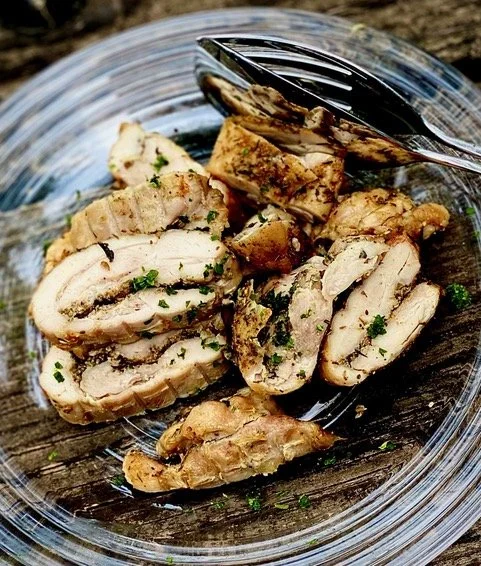
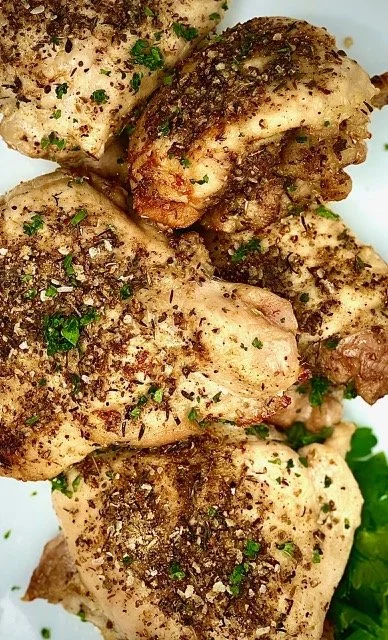
Roasted Chicken Thighs
6 boneless skinless chicken thighs, trimmed of fat
2 tablespoons olive oil
Seasoning mix for roasted meats and poultry
Preheat the oven to 350 degrees. Prepare a baking sheet with aluminum foil, and spray with nonstick pan coating.
Space the chicken upside down on the sheet tray with distance between them. Brush the undersides with some of the olive oil, then sprinkle the chicken with a thin layer of the roasted meat seasoning. Turn the thighs over and repeat on the other side. Fold the thighs in half and roast to 165 degrees, around 30 to 40 minutes, depending on their size, let rest 10 minutes before enjoying.
Serves 4 to 6.
Culinary School Seasoning for Roasted Meats and Poultry
2 tablespoon kosher salt
2 tablespoon dry mustard
2½ teaspoons freshly ground black pepper
1½ teaspoons dried thyme dried oregano
1½ teaspoons ground coriander
1½ teaspoons celery seed
Combine all the spices. Store in a tightly sealed container for one month. Can be multiplied.
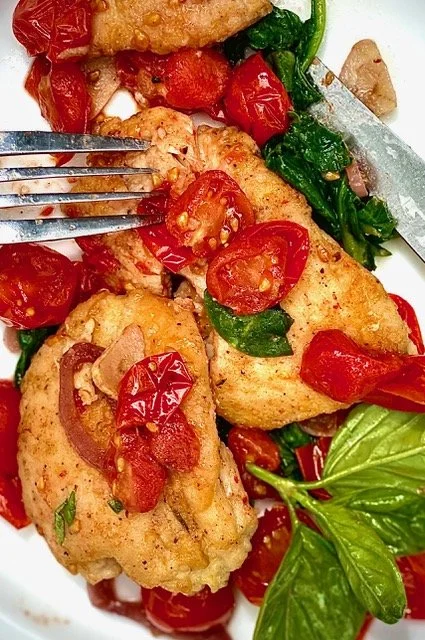
Chicken Thighs with Sauteed Tomatoes and Garlic
6 boneless skinless chicken thighs, halved into two medallions
Kosher salt
Fresh ground pepper
2 tablespoons of olive oil, divided
6 garlic cloves, thinly sliced
2 shallots, thinly sliced
¼ cup white wine
4 cups halved cherry or grape tomatoes
1 teaspoon sugar
2 teaspoons balsamic vinegar
Season the chicken thighs on both sides with salt and pepper. Heat one tablespoon of olive oil in a large skillet on the stove top. Cooking in batches, place the chicken medallions top side down first in the pan. Allow to cook 4 to 5 minutes, until golden. Turn them over and cook another 4 to 5 minutes until they reach 165 degrees. Remove the chicken from the pan and set aside. Cover with foil to keep warm while making the tomato sauce.
Remove the oil from the skillet, and wipe it clean. Return the pan to the stove and heat the remaining olive oil in the skillet. Add the garlic slices and cook until just lightly golden. Remove the garlic, leaving the oil in the pan, and drain them on a paper towel.
Add the shallots and cook until translucent, around 3 to 5 minutes. Add the white wine to the pan and let it reduce by half. Add the cherry tomatoes, cooked garlic, sugar and balsamic vinegar to wine in the pan. Simmer until tomatoes until they release their juices and create a sauce, stirring often, around 10 minutes, Remove the pan from the heat and season to taste with salt and pepper.
Ladle the cooked tomatoes over the sauteed chicken to serve.
Serves 4.
Ancho Steak Tacos with Tomato, Corn and Avocado Salsa
1 (1½ pound) flank steak
Ancho Spice Mix
2 tablespoons of olive oil
1 package of corn tortillas, heated
Fresh cilantro leaves
1 lime, cut into 8 wedges
Tomato vegetable salsa
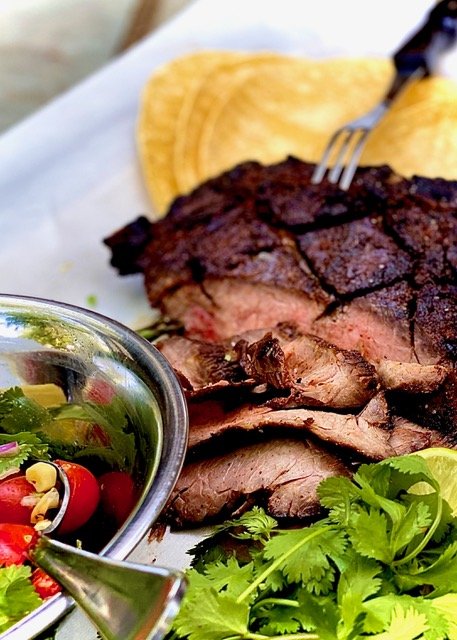
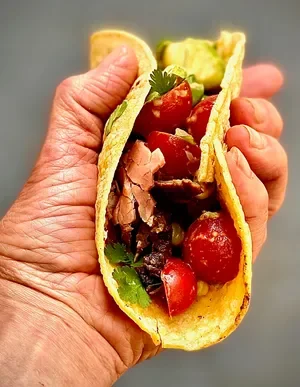
Pat dry the flank steak with paper towels. Score the meat and rub the generously with the Ancho Spice mix on both sides, coating it completely. Wrap the steak tightly in plastic wrap, and refrigerate for at least two hours, or up to 24.
Preheat a grill to high heat. Remove the steak from the saran wrap and pat dry. Brush the steak with some olive oil and place it on the grill. Grill until well browned, around 15 to 20 minutes to 132 degrees for medium rare, or to desired temperature, turning once. Let rest for 10 minutes. Slice thinly against the grain before serving.
Serve steak on corn tortillas topped with some cilantro, lime juice, and the tomato, corn and avocado salsa.
Serves 4-6.
Ancho Spice Mix
1 tablespoon Spanish paprika
1 tablespoon ancho chili powder
2 teaspoons kosher salt
2 teaspoon ground cumin
1 teaspoon coriander
2 tablespoon brown sugar
1 teaspoon dry mustard
1 teaspoon ground black pepper
1 teaspoon dried thyme
½ teaspoon cayenne pepper
Combine all the spices. Store in a tightly sealed container for one month. Can be multiplied.
Adapted from Epicurious.com.
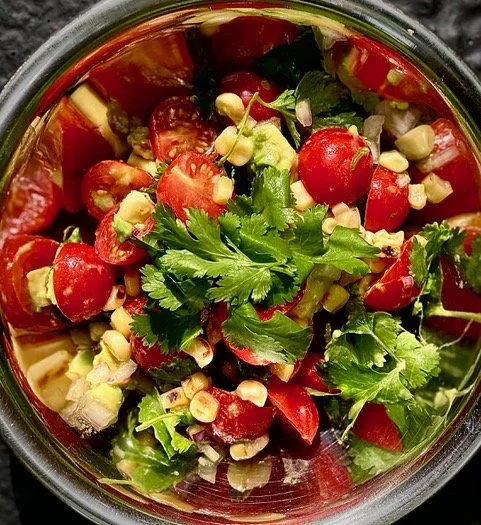
Tomato, Corn and Avocado Salsa
2 cups cherry tomatoes, halved
1 cup of cooked corn kernels
¼ cup red onion, diced small
1 jalapeno pepper, seeds and ribs removed, diced small
1 cup of fresh cilantro, coarsely chopped
⅓ cup fresh lime juice
1 avocado, cut into a medium dice
Combine the tomatoes, corn, red onion, jalapeno, cilantro and lime juice. Stir to combine well and season to taste with salt and pepper. Gently fold in the avocado without overmixing. Use as a salsa for ancho flank steak tacos.
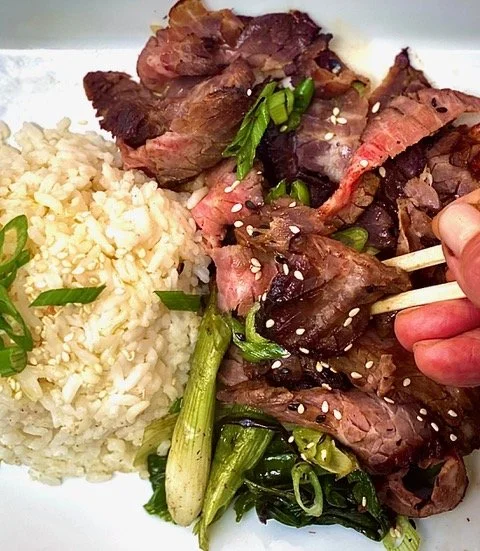
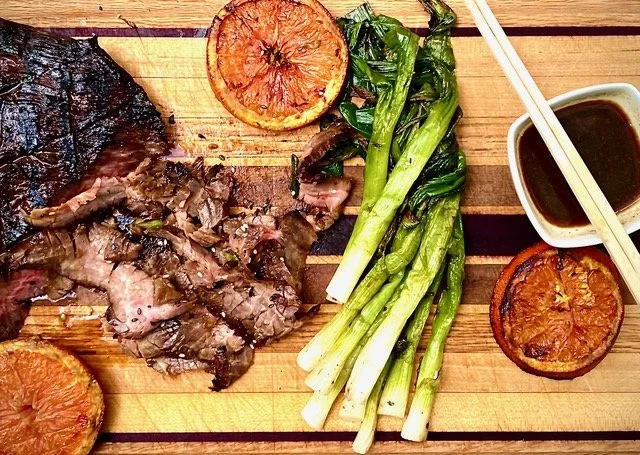
Teriyaki Flank Steak
1 (2-pound) flank steak
Teriyaki marinade
2 tablespoons olive oil, divided
Kosher salt
Fresh ground pepper
1 bunch green onion, trimmed
1 orange, sliced into thick rounds
Preheat the grill to high heat.
Make the marinade and set aside ¾ cup. Score and seal the steak with the remaining marinade in a plastic bag, squeezing out any excess air. Place in the refrigerator for at least two hours, and up to 12.
Heat the reserved marinade in a small sauce pan. Simmer until reduced and slightly thickened, around 10 minutes. Strain and use as a side sauce for the steak.
Remove the steak from the marinade and pat dry. Brush with some olive oil and season with salt and pepper. Grill uncovered for around 15 to 20 minutes to 132 degrees for medium rare, or to desired temperature, turning once. Let the steak rest for 10 minutes. Slice thinly against the grain to serve.
Coat the green onions and orange slices with the remaining olive oil and season with salt and pepper. Grill until slightly charred and marked. Serve alongside the flank steak.
Serves 4 to 6.
Teriyaki Marinade
¾ cup soy sauce
¾ cup peanut oil
6 tablespoons dry sherry
2 tablespoons honey
6 tablespoons orange juice
2 teaspoons minced garlic
2 teaspoons grated fresh ginger
Combine all ingredients except the orange juice, garlic and ginger. This base can be multiplied and stored in the refrigerator for up to one month. Add the garlic and ginger before using. Stir well to combine.
This story originally appeared in The Detroit News in June 2022.