
When the Cows Come Home
How Alpine Cooking Traditions Translate Naturally Into the Michigan Kitchen of Alpino
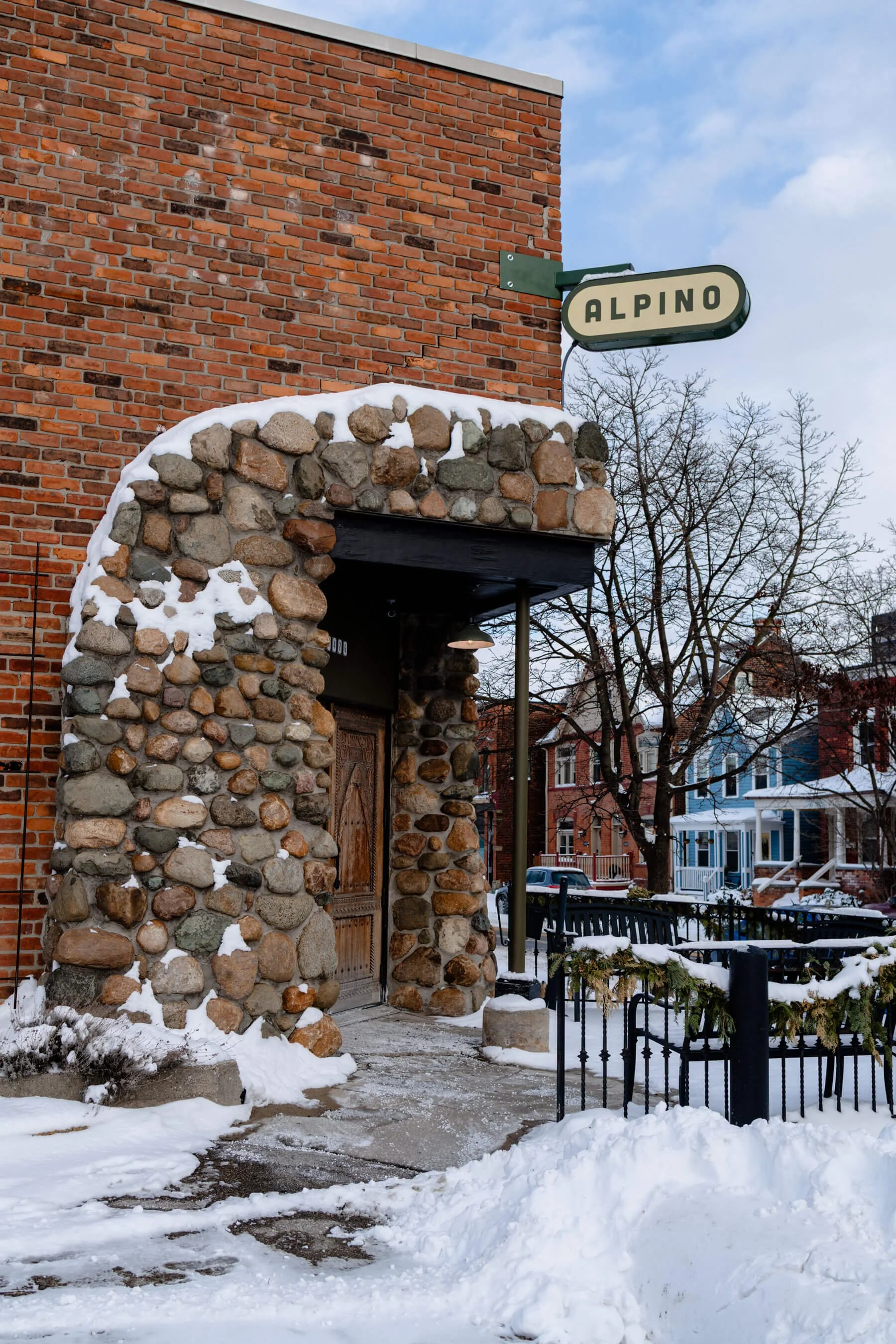
Before meeting with owner David Richter and chef Colin Campbell of Detroit’s Alpino, I read about Sandra Igl, a seasonal Alpine cheesemaker who spends her summers living and working on Hinterfeld Alp in Switzerland’s canton Uri. Alpino, which opened in 2023, is located near the historic Michigan Central corridor, roughly one mile southwest of downtown Detroit.
Knowing little about Alpine cuisine, I wanted insight into the menu at Alpino, which in winter reads like a collection of comforting, nutrient-dense dishes centered around the relationship between farmer, land, animals, and season. The restaurant’s philosophy leans on seasonally available foods coming from forests, lakes, and rivers — both fresh and preserved. What brings me into the kitchen today is a desire to understand how those Alpine traditions are integrated into their Corktown kitchen.
A deep dive online led me to stories of modern Alpine dairy workers like Igl, whose tale revealed much about this hearty, rib-sticking cuisine. Their origins begin in Alpine shelters scattered along the mountain ridges of Austria, Germany, France, Italy, Slovenia, Monaco, Liechtenstein, and Switzerland — places shaped by elevation, weather, and necessity.
Menu items like French raclette with speck, Gruyère and Emmentaler fondue, Wienerschnitzel, walleye with cabbage, and diots au vin blanc — pork sausages cooked in a broth of white wine and onions — are dishes that originate in places with four short seasons, much like Michigan. They’re made with ingredients you might find in a remote cabin in the Upper Peninsula, an Alpine hut in Switzerland, or shelters tucked among any of those European mountain ridges.
Animal husbandry is one of the few agricultural practices that thrives at high altitudes, where cool temperatures and dense humidity limit what can be farmed. Farmers have returned to these pastures for centuries, knowing that the intense sunlight produces plants with a higher fat and protein content, making them more calorically dense. Alpine herbs, grown only in these locations, carry high concentrations of ethereal oils that impart flavors into the milk unique to each region.
The milk produced at elevation is richer — often containing 15 to 30 percent more fat — which is at the foundation of the region’s famed cheeses, butter, yogurt, and buttermilk. It’s also why the villages at lower elevations celebrate when the cows come home in fall.
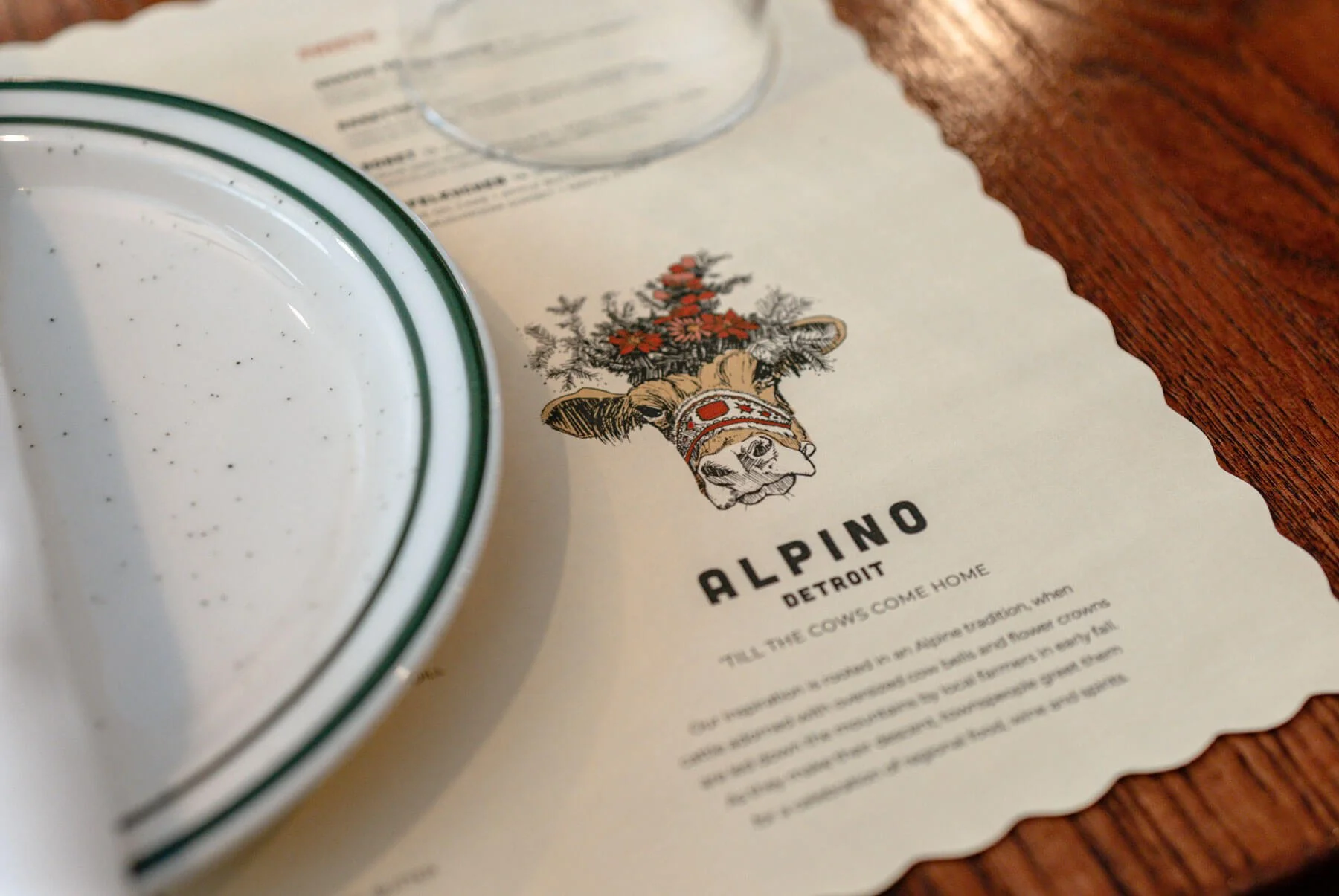
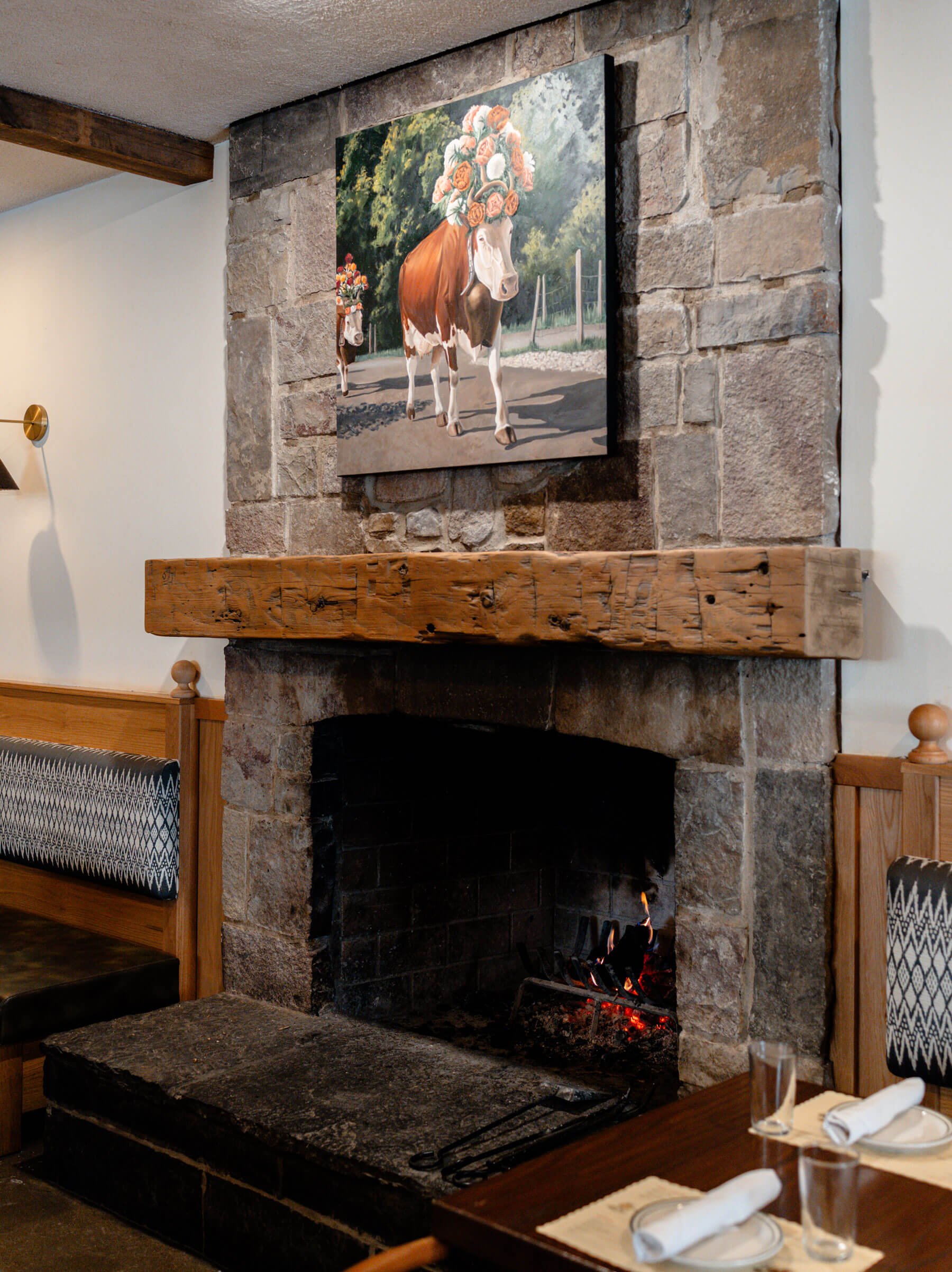
In Alpine towns, villagers line the streets waiting for the herds to appear, marking the official end of summer. The distant sound of bells grows louder as cattle descend the slopes, colorfully adorned with flowers. They march through the streets, followed by villagers in traditional dress playing instruments, leading everyone toward the large communal lodge in the center of town. Inside, friends and family sit shoulder to shoulder at long tables with wooden benches, celebrating with music and beer, just as they have for generations. Traditional foods are served — raclette, fondue, local sausages, and pastries — designed to nourish and be shared, like they are at Alpino.
It’s that sense of connection found in small Alpine towns that restaurateur David Richter set out to capture when he conceptualized Alpino. The 3,200 square foot space has a main dining room that holds 70 guests, a downstairs event space for up to 40, and room for another 48 seasonally on the outdoor patio.
After extensive travel to the region and a two-decade hospitality career in New York working with Joe Bastianich, Cesare Casella and most recently Michael Dorf of City Winery, the Michigan native returned home to launch Rust Belt Hospitality. The group’s first venture, Alpino, is a restaurant rooted in traditional farming, Alpine cheesemaking, winemaking, and craft practices that stretch back generations.
“We wanted to feel like we were paying respects to the farmers. ”
— Said Richter
“We tried to focus on what they grow during the season and what they do to preserve food through the colder months.”
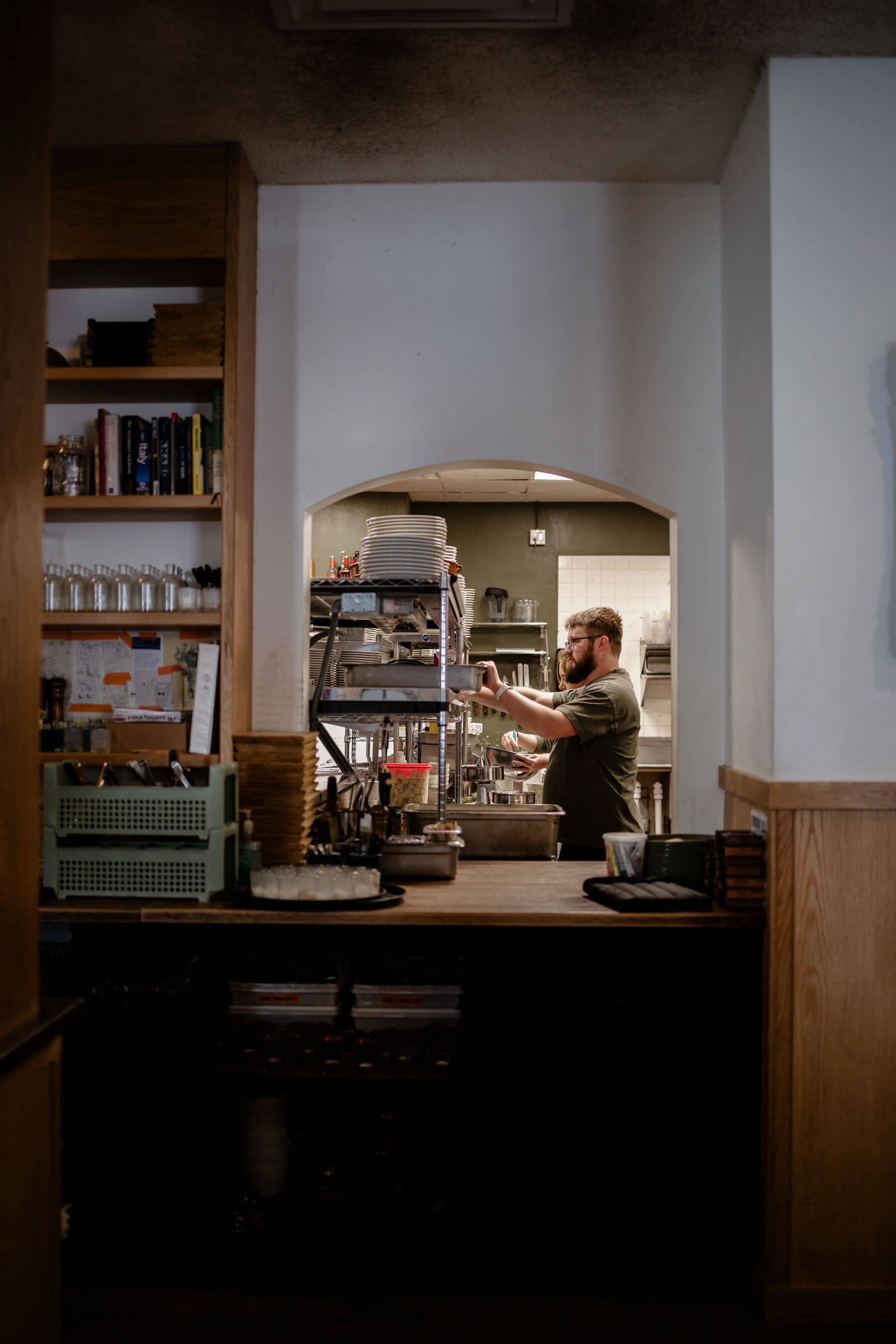
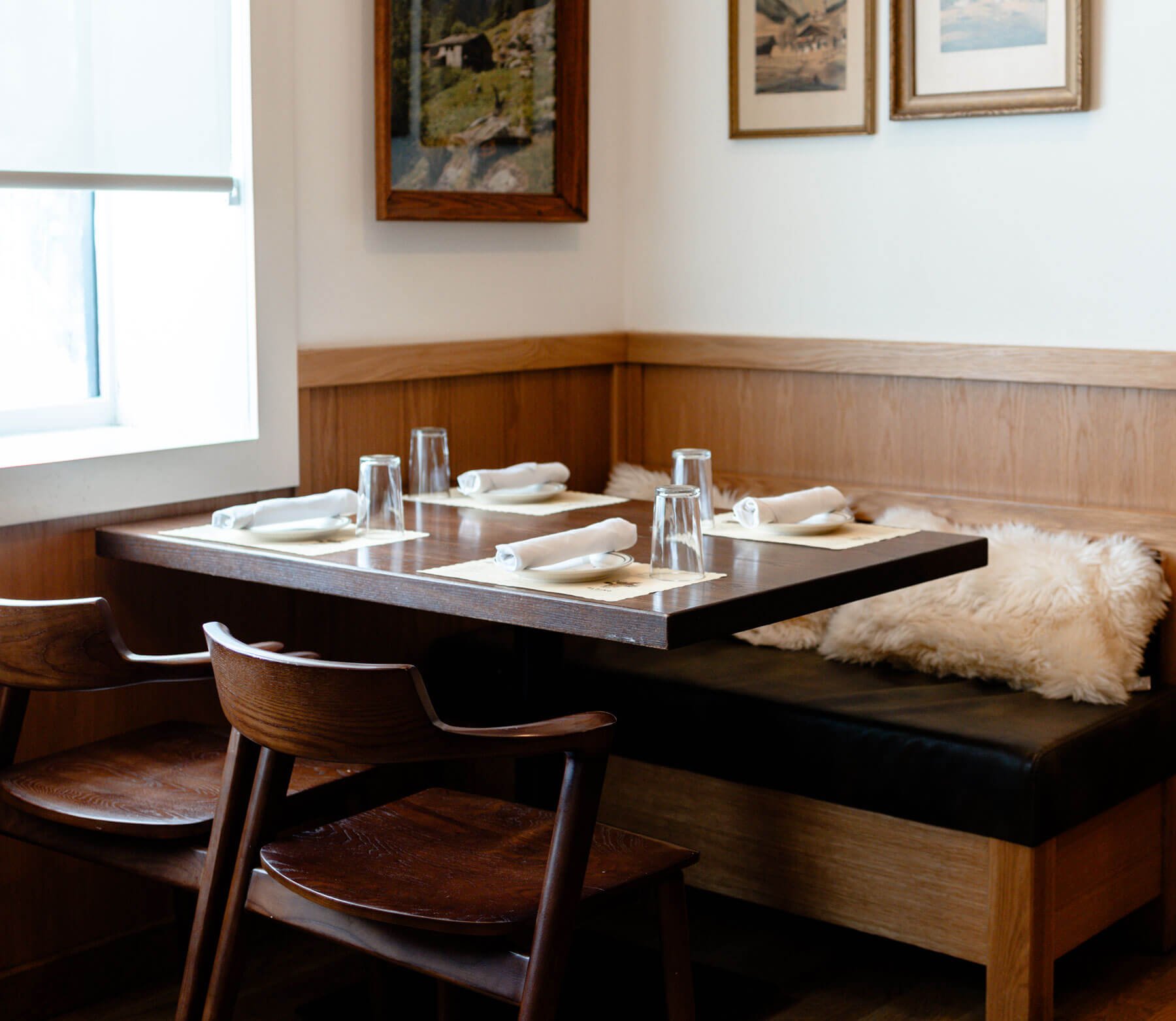
Alpino’s cuisine isn’t a clearly defined category, but rather a worldview shaped by short seasons, simple ingredients, resourcefulness, and wines grown nearby. Richter’s entry point into Alpine culture centers around connection as much as the food. You see it in the long communal tables, the low lighting, the warm glow of the fireplace, and the softly playing background music. The long tables decorated with different bottles of wine, and people passing plates, talking and tasting.
What resonated with Richter in Europe were the close bonds people share in those mountain towns — the comfort of the rituals, festivals, and meals that gather residents and visitors together. He believed that same sensibility would appeal to the people of Detroit, and it has.
“We wanted this to be a neighborhood space that wraps it’s arms around you when you walk in the door.”
— Said Richter
“The goal was to feel like you’re coming home, and in most home settings, the food is communal.”
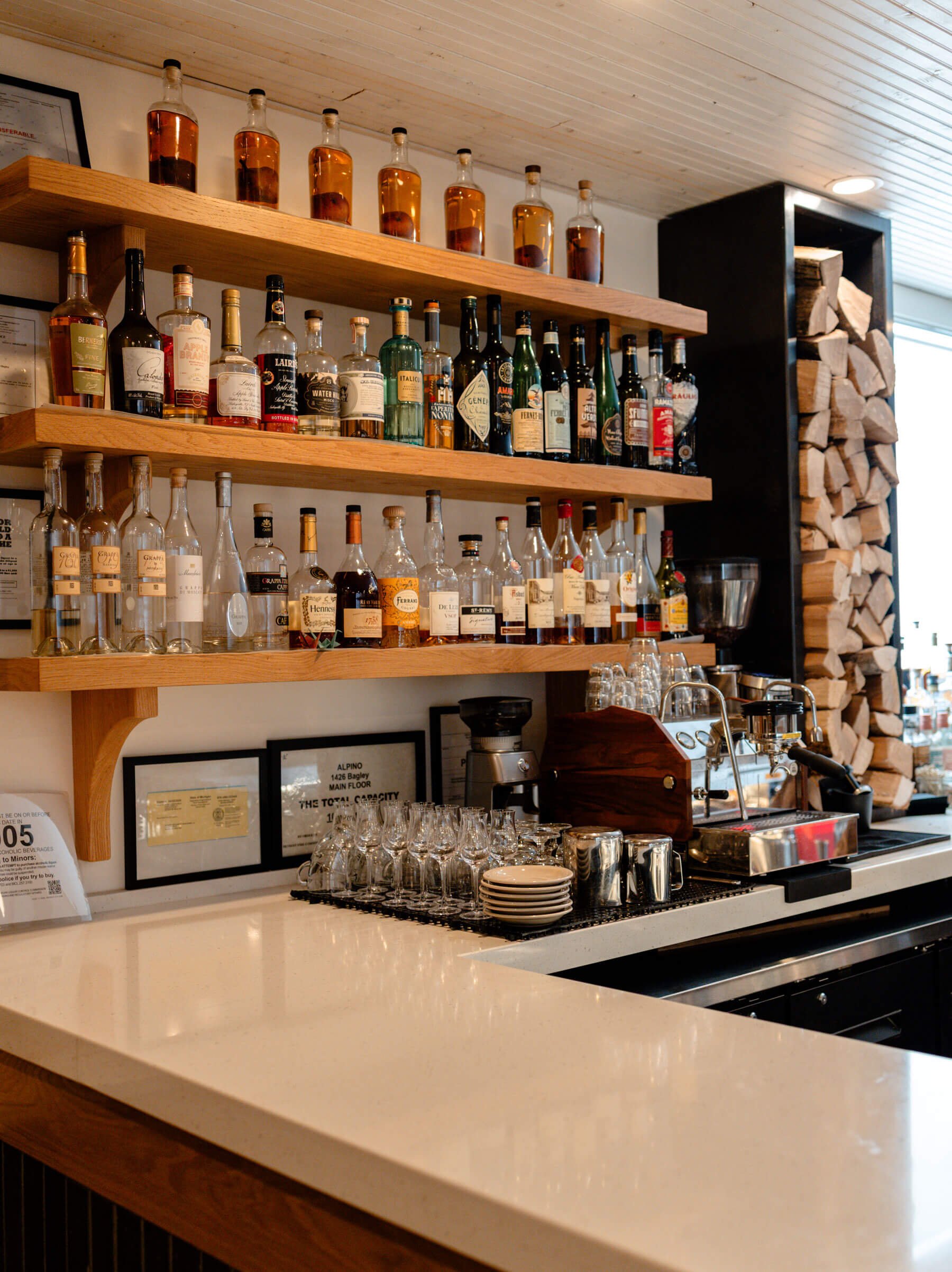
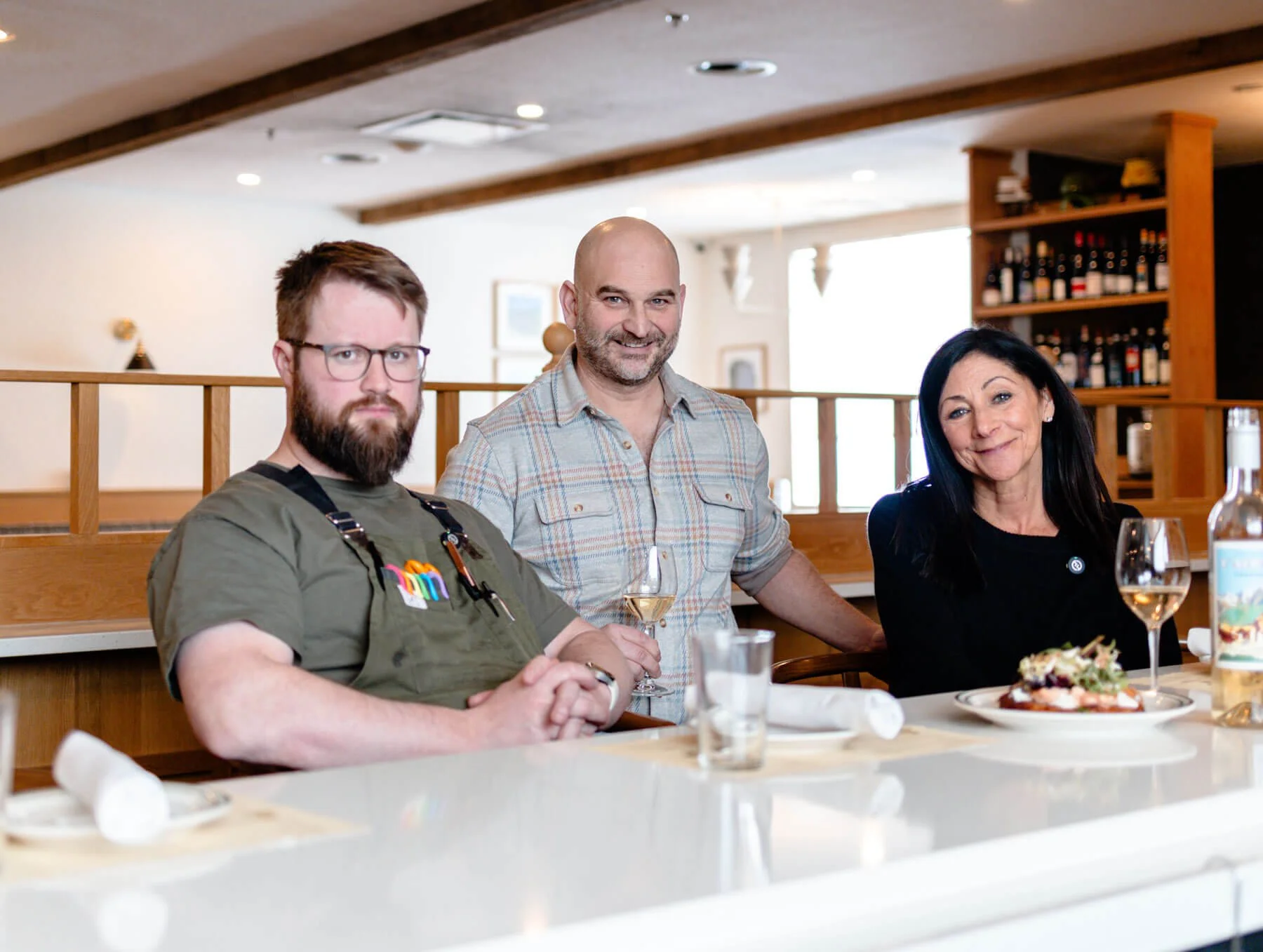
Behind the cuisine is chef Colin Campbell, who grew up with family members that owned restaurants. He began working in them and around food at a young age, learning early on he wanted to make it his career.
Campbell is someone who understands short seasons intimately — something he’s learned from living in small northern towns. He’s a northern cook in the cultural sense, influenced by lake towns and snowy cities alike, all with dramatic seasonal swings. The places he’s worked, like Pour Kitchen in Petosky, Das Steinhaus in Marquette, and Troquet in Boston-are all places where the winter dictates everything, especially the menu.
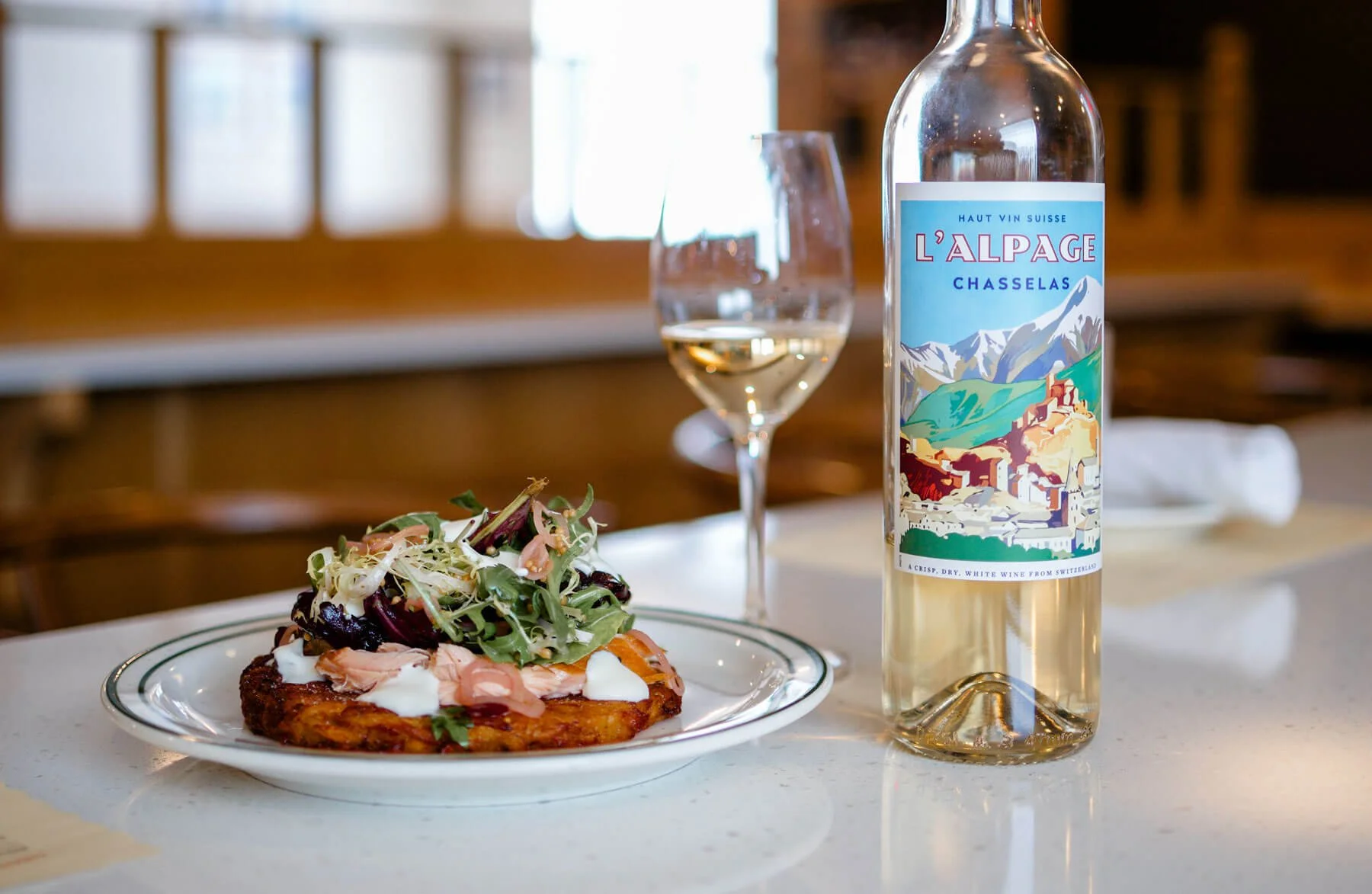
Campbell cooks the way people in cold regions do, appreciative of summer’s bounty and staying resourceful through winter, building dishes to nourish the body and feed the soul. His cooking style is rooted in seasonal, local ingredients like freshwater fish, foraged goods, sturdy greens, grains, potatoes, cured meats, imported cheeses, butter, and broth. He honors old world recipes without overcomplicating them, letting the ingredients speak for themselves, using slow, deliberate cooking methods to develop deep flavors. Everything — from pastas to dumplings and the extremely popular Rösti— is made in house by hand.
“Some of the dishes can be labor intensive.”
— Said Campbell
“But they’re an important part of what we do as an Alpine restaurant that cooks Alpine food.”
Sitting in the dining room, with the fireplace glowing watching the tables fill up, Alpino feels like something Michiganders have always understood. Alpine cuisine works here not because it’s European, but because we already speak this language — just with a slightly different accent. The mountains may be thousands of miles away, but the way we gather and share food here is strikingly familiar.
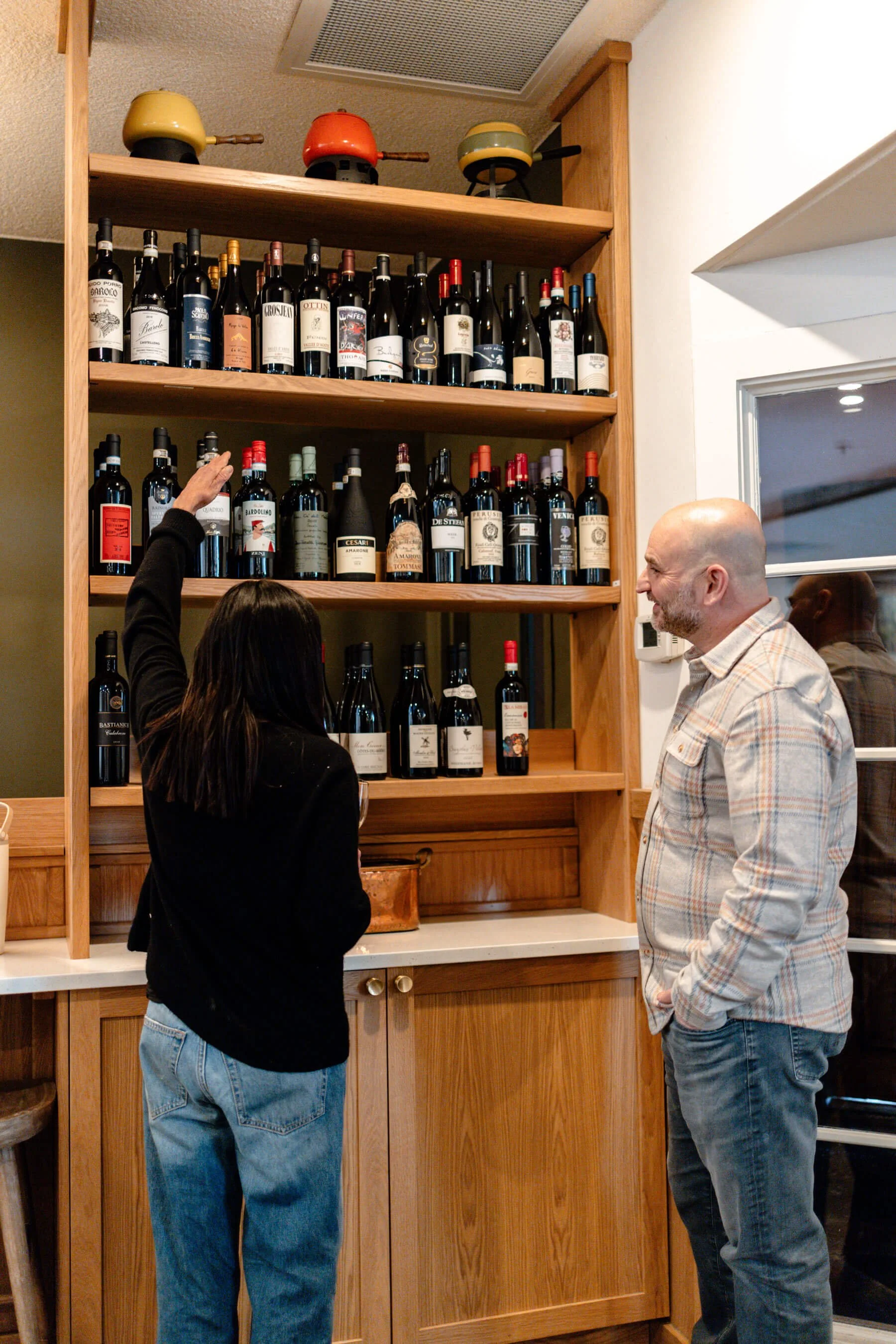
“We’ve spoken to people who have traveled and lived in those areas and have eaten here and loved it.”
— Said Richter
“To have our food resonate with them and the community has been the highest compliment.”
At Alpino, the food is seasonal and hearty, designed to be shared with others and fill you up after working hard outside all day. When a dish arrives at the table, everyone leans in for a closer look. They capture some of the aroma before tearing off a piece of bread and digging in.
Passing plates, they collect bites of venison loin with a poivrade sauce, turnip tartiflette under a blanket of bubbling cheese, traditional chicken goulash with a paprika infused tomato gravy, or spätzle with crème fraiche. The kind of deeply satisfying food that encourages people to get comfortable and stay a little bit longer. Just like they do along the Hinterfeld Alp in Switzerland’s canton Uri.
Sidebar: About Sandra Igl
Each summer on Hinterfeld Alp in Switzerland’s canton Uri, Sandra Igl lives and works at elevation as part of a seasonal Alpine dairy operation still following centuries-old customs. She’s returned here year after year, working within a system defined through repetition —the same pastures, animals, and demanding work each season.
As a cheesemaker and alpine worker, Igl is responsible for milking cows, tending the herd, and transforming fresh mountain milk into cheese on site so it’s easier to transport. She maintains grazing pastures, fences, and daily production while monitoring the health of the cows brought to these high elevation pastures for generations.
Her days begin before sunrise and stretch well into the evening, a 16-hour day shaped entirely by weather, terrain, and livestock. As summer ends, Igl helps prepare for the seasonal descent, when cows are guided back down the mountain, bells ringing and covered with flowers. For her, life on the alp is demanding but purposeful and rooted in the understanding of the inseparable connection between the land, animals, and food.
Alpino is located at 1426 Bagley St., Detroit.
Hours
Sunday 11am-3pm and 5pm-9pm
Monday—Thursday 5pm-9:30pm
Friday—Saturday 4:30pm-10pm
Reservations are available by phone at 313-524-0888 or through the website at alpinodetroit.com.