
Cooking With Embers
Argentine fire cooking and the discipline behind Barda’s kitchen in Detroit.
I’ve done enough grilling in my life to know how quickly the flames can get out of hand. Flare-ups, excessive smoke and uncontrolled heat are not desirable — and a clear sign that your fire is getting away from you.
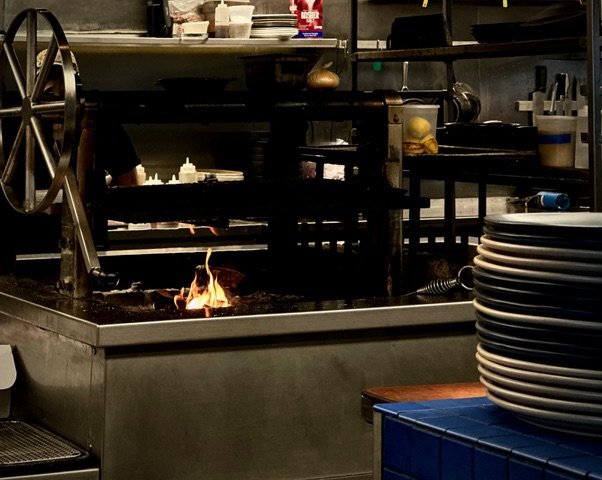
Chefs who know how to cook on a Santa Maria–style grill are the best at averting these situations. I always pick a table in the restaurant where I can watch them work. It fascinates me how they intuitively raise and lower the grates or add more wood to keep the fire at a steady burn throughout service.
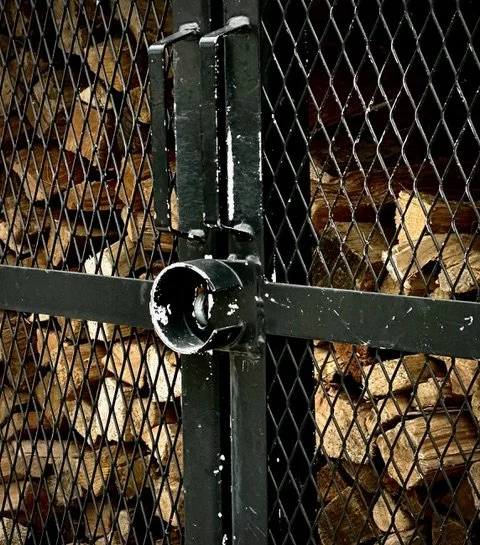
One of the best places to see this is in the Argentinian-inspired kitchen of Barda in Detroit. Here, it’s all about control — and a steady supply of embers being continually reshaped to disperse the heat.
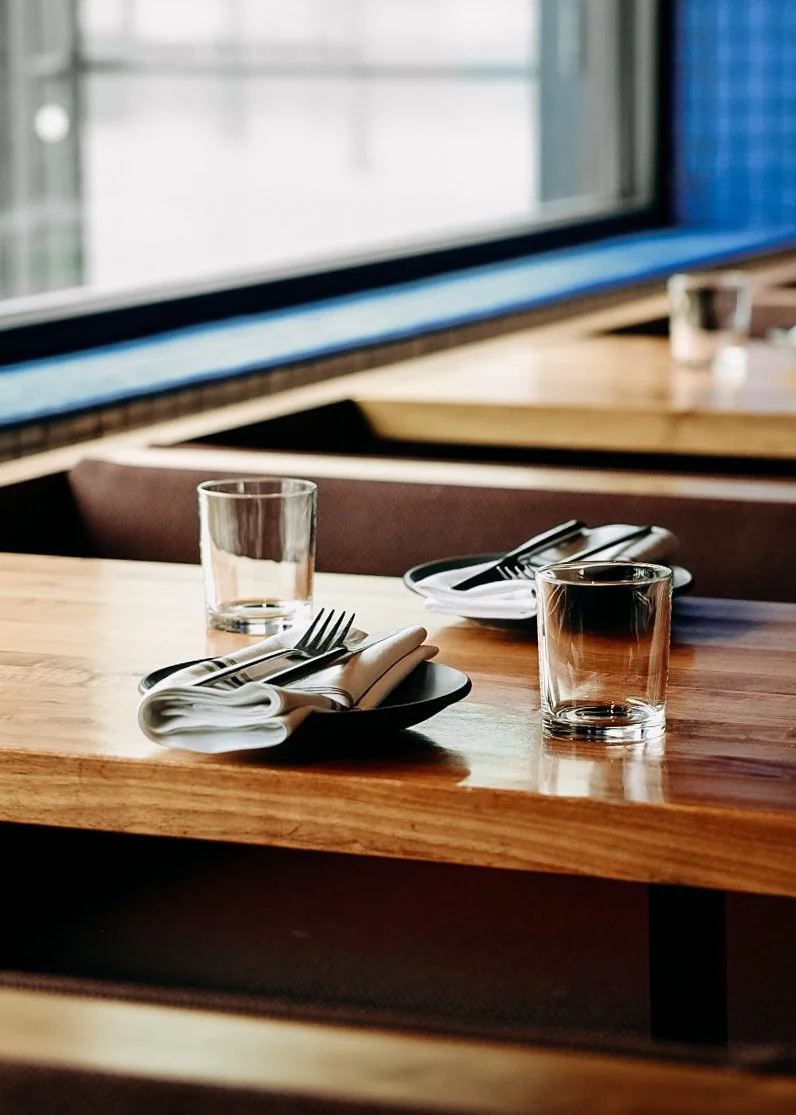
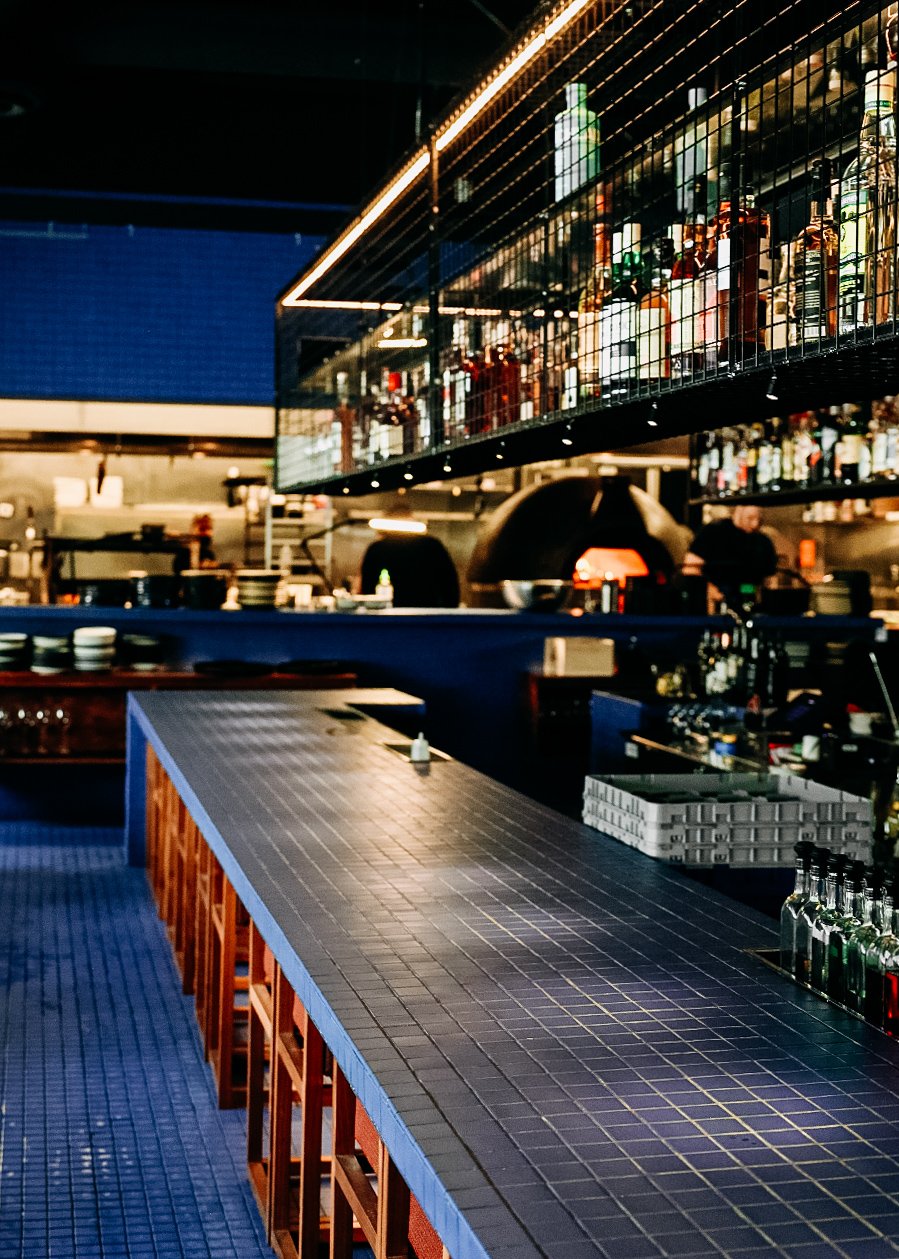
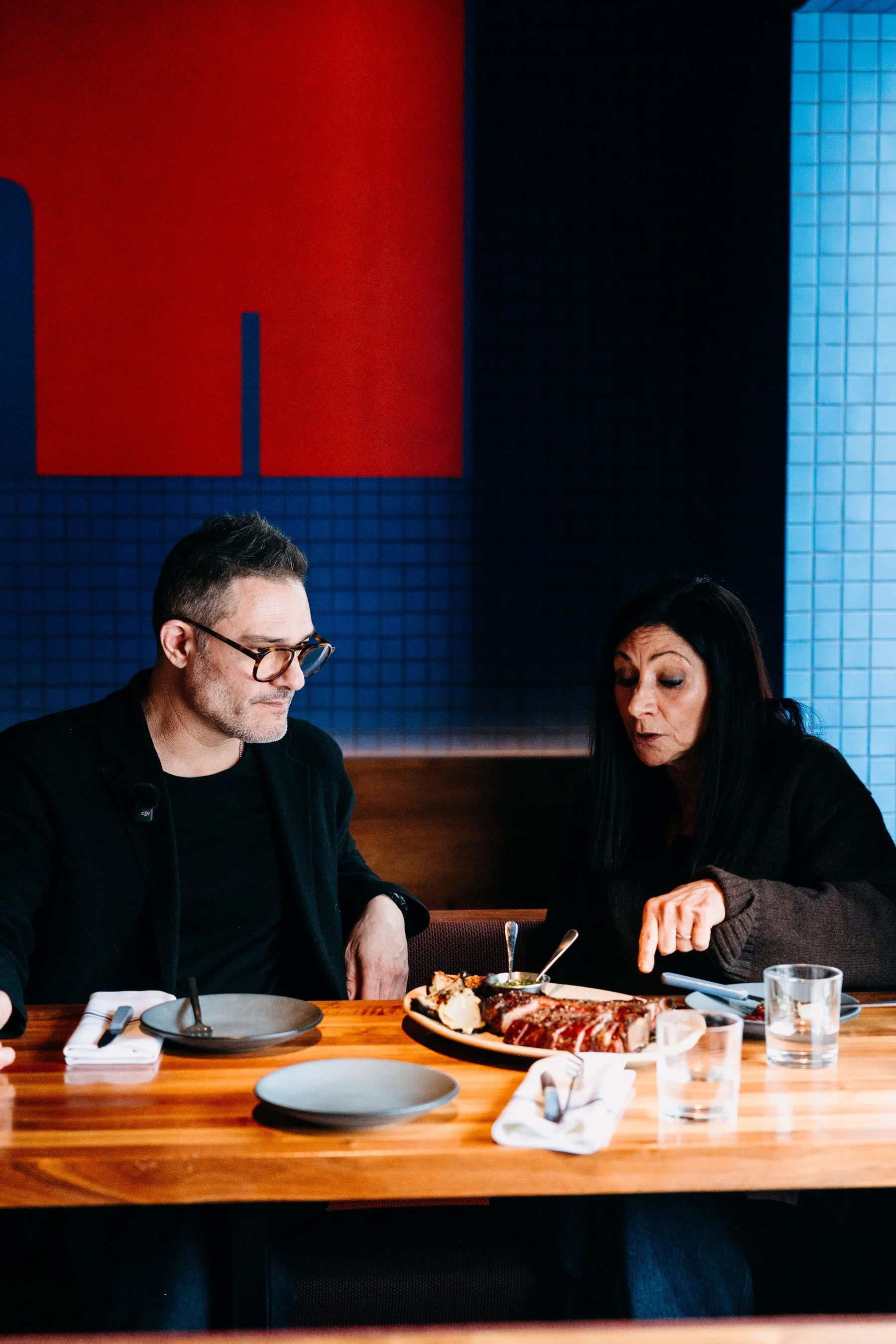
Barda is in Core City, just 2.5 miles northwest of downtown, and housed in a former radiator shop. The 113-seat location is lit with a warm red glow and outfitted with booths around the perimeter. In the center of the room is a sunken 30-seat bar, once a service bay, that provides guests with an unobstructed view of the entire space. The adjacent outdoor park can accommodate another 20 guests during the summer months.
The Barda kitchen moves to the pulse of upbeat house music, working in concert to prepare dishes either over a parrilla-style grill or in a wood-fired oven. It’s something that would challenge most chefs, at least initially. But for Barda’s owner, Argentine-born chef Javier Bardauil, cooking with fire is a discipline and a language he speaks fluently.
When he first walked into the space, he recognized its limitations immediately. No gas line, pilot lights or back up burners, only wood to fuel the equipment.
“If you don’t know how to cook with fire, you’re not able to do anything here.”
— said Bardauil
“We have a wood-fired oven and a grill — that’s it.”
Bardauil understands that a good fire cannot be rushed. It takes time and patience — a lesson he learned long ago. Most homes in Argentina are equipped with live-fire grills called parrillas. In his conversation with Ann Delisi and James Rigato on WDET’s Essential Cooking, Bardauil described fire as a tool that feels natural to step into — something instinctive rather than performative. He also spoke about learning early from mentors in his career that restaurants live on in memory long after the meal ends, and that everything, from how the food is cooked to how guests feel, plays a part in that experience.
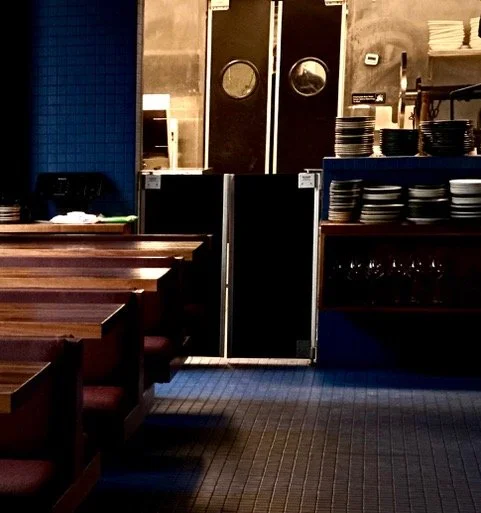
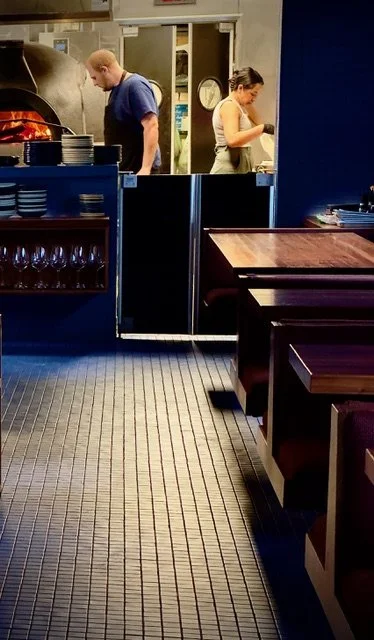
In Argentina, parrillas, which resemble Santa-Maria style grills, are fueled by fragrant hardwoods or wood-based charcoal, depending on where you live. The fire is started at one side of the grill and once the wood burns down to red-hot embers, they are spread evenly beneath the V-shaped grates of the cooking surface.
Food cooked on the parrilla becomes the focal point of a celebration called an asado — the heart of Argentinian cooking and an important weekly cultural ritual that often lasts well into the night. Friends and family gather while the parrillero, or grill master, works the parrilla, preparing a range of cuts both large and small. Dishes are enjoyed as they finish cooking throughout the day, with the smaller cuts served first. The day is slow and social, centered around the cook, food on the grill and time spent together.
Bardauil has updated certain cooking techniques for the restaurant, like using direct fire to achieve a good char quickly, something rare in Argentina. There, most everything is cooked over indirect heat, which the chef has all day to do. But here, restaurants don’t have the same luxury of time. Dishes need to be completed in a timely manner so the kitchen made adjustments to meet the challenge.
“Here, the pace is faster, so we need to use the embers and flames to help accelerate the cooking time.”
— said Bardauil
“Detroit helped shape me in that way.”
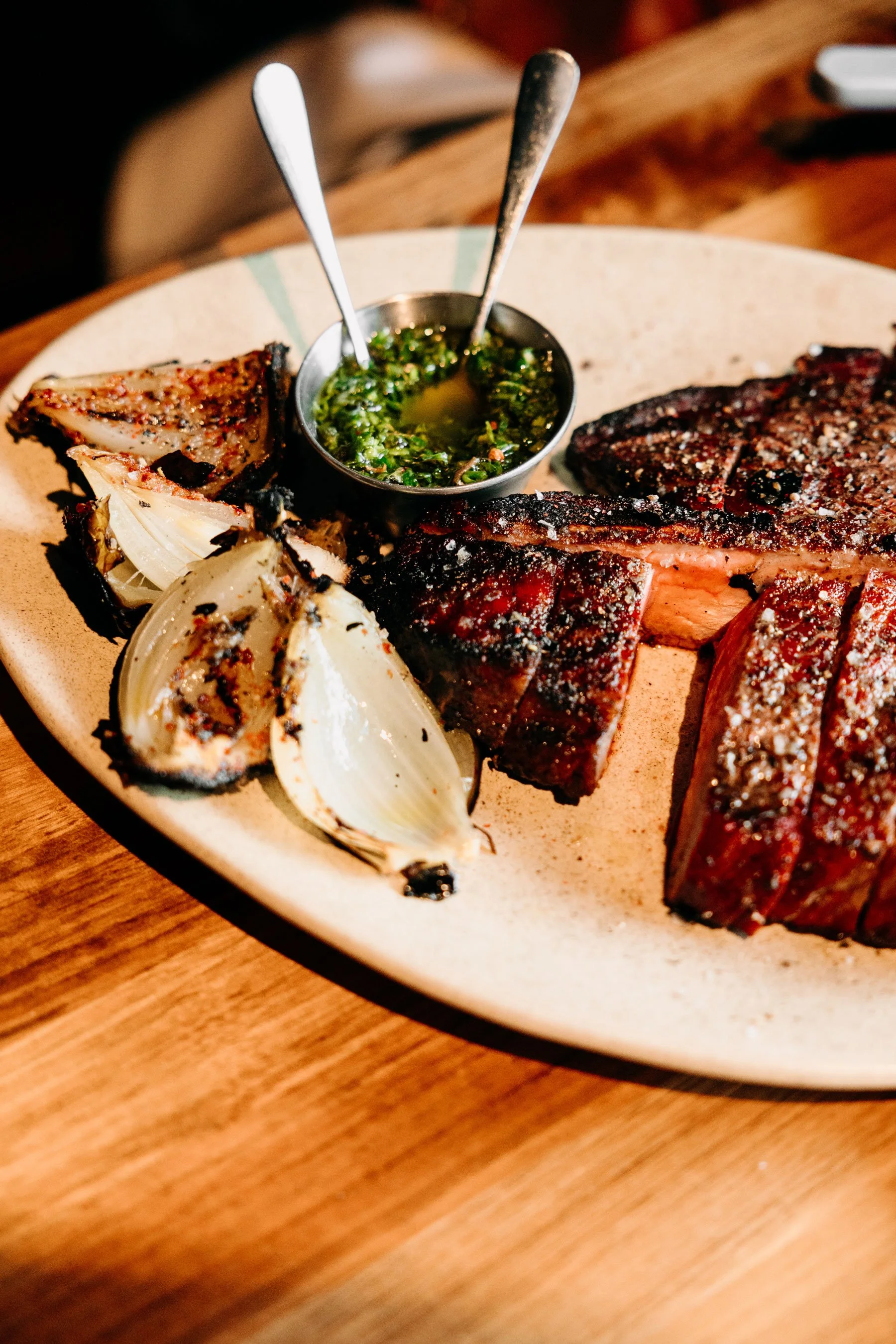
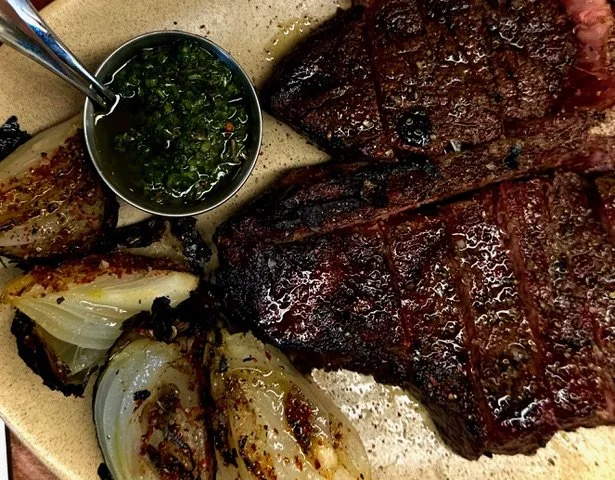
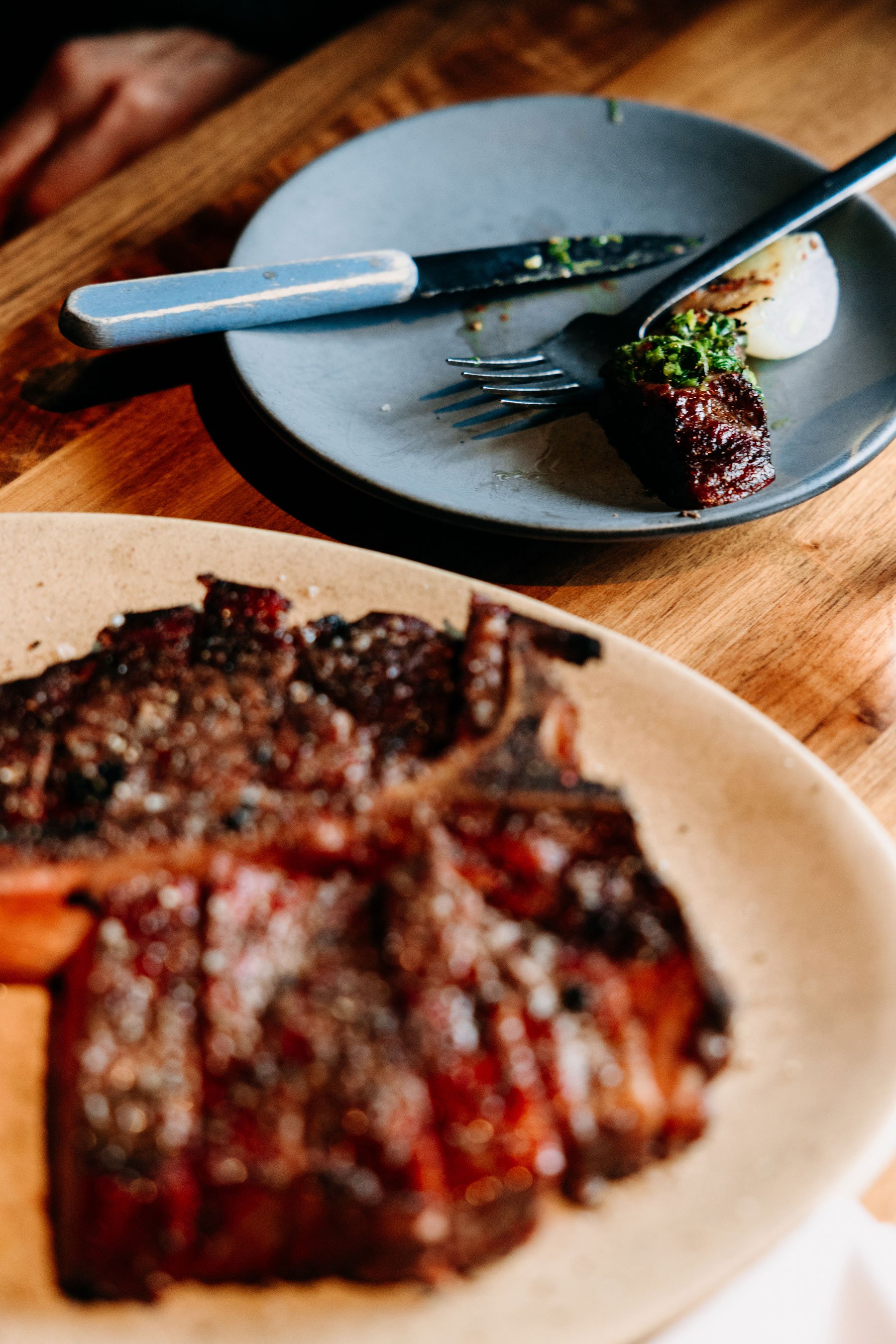
Sometimes, you’ll see him coaxing the flames higher, giving a porterhouse a perfect char before finishing it over indirect heat. Other times, the ingredients are buried directly in the ashes, which Bardauil demonstrated by pulling out whole onions from a bed of glowing embers — a Patagonian technique known as rescoldo. It’s used in regions where wind and cold make open flame too difficult to manage, so cooking happens slowly beneath the surface.
Dark with char on the outside but impossibly sweet and tender, the sugar in the onion gets coaxed out gently, while the skin retains all the moisture. It’s a great example of how the kitchen handles fire with restraint, which can be used to tenderize as much as it can sear.
Argentinian food has roots in Europe, especially around the Mediterranean. By the 1800s, nearly a million people had emigrated from Italy and Spain, and their culinary influences blended with native livestock and available agriculture. Spanish settlers introduced key staples such as empanadas, stews and tortilla Española, along with sweet contributions like dulce de leche and the South American cookie sandwich known as alfajores. From Italy came pastas, cured meats, Milanese, and confections like gelato and the Christmas staple pan dulce.
While Bardauil draws inspiration from Argentina’s diverse culinary heritage, he also likes to experiment and try new things. His cross-continental career is evidenced by diverse menu options including rescoldo beets, served with the creamy almond based sauce ajoblanco and a dusting of raspberry ($18); celeriac tagliatelle with pecan foam and fried sage ($26); and Michigan trout with brown butter, capers, charred lemon and fresh herbs ($48). The grilled short ribs are coated by a pepper-coriander crust and served with salsa criolla, a zesty Latin condiment made with onions, chili peppers, cilantro and lime juice ($76).
“I’m not attached to only my culture. If I discover something new, I will use it.”
— said Bardauil
“I’m very curious and like to grow, so if I get the chance to add to my knowledge, I will do it.”
Bardauil has a healthy respect for the entire animal, which extends beyond the cuts on the grill. He receives whole sides of beef, which he butchers in-house. Fat trimmed from the process is rendered into tallow — a practice rooted in Argentine nose-to-tail cooking, where nothing usable is discarded. Prized for its high smoke point, tallow adds a savory depth to the steaks and other foods. It’s put into a metal funnel that’s been heating in the embers, that slowly drizzles the oil over the food as it melts.
Born and raised in Buenos Aires, Bardauil attended the Argentine Gastronomy Institute and then the Lenôtre School in Paris. He later worked under mentor chef Francis Mallmann at Patagonia Sur, mastering the art of cooking with open fire. After working in Spain, France and Italy, he returned to Argentina as culinary director of one of Buenos Aires’ most traditional steakhouses, Happening, before landing in Detroit.
His wife, a real estate professional in Buenos Aires at the time, told him about the real estate growth in Detroit. After doing his research, he scheduled a visit and was impressed by Detroit’s growing culinary scene. He toured the area on a warm and sunny summer day, and got excited about what he saw. Convinced, he moved his family to Michigan in 2019 and secured the Core City space. Barda opened in 2021 and has been celebrated ever since.
By 2022 it was named a James Beard finalist for Best New Restaurant and Best New Restaurant by The Detroit Free Press. Bardauil earned James Beard semifinalist nods for Best Chef: Great Lakes in 2025 and 2026. He opened the casual sister restaurant Puma in 2024, featuring the bold flavors of Latin street food.
Bardauil’s food resonates here because he values many of the same things Detroiters do — hard work, grit and patience. Detroit is a city that understands results come from repetition and attention, not speed. In a former radiator shop, once powered by substantial heat of its own, the kitchen feels like an organic fit.
There are no shortcuts here. Fires are built early and tended throughout the evening to keep it burning. Each careful step taken ensures that anything coming out of the kitchen is something to celebrate — and explains why Argentine fire cooking feels so natural here in Detroit.
Barda is located at 4842 Grand River Ave., Detroit.
Reservations can be made at bardadetroit.com or by calling 313-952-5182.
Hours
Wednesday—Thursday 5pm-9pm
Friday—Saturday 5pm-10pm
Sunday—Tuesday Closed