
The Garden Finds Its Rhythm
Some things thrive, some struggle and most surprise me every year.
There’s a point in every season when my garden morphs from a plan in my head to a growing, living entity that demands daily attention. That’s a good thing, because it means the plants are thriving.
The warm weather and longer days indicate that growth is underway, and that the vegetables are starting to mature. The tomatoes and zucchinis are taking off. They’re flowering, forming fruit and in need of regular pruning. One of the zucchini plants isn't doing well, so I moved it to another location in the bed for better sun. For extra insurance, I put in new seeds too in case the plant doesn’t make it, If it recovers, great, if not I have replacements. I’ve learned not to put all my faith into a single plant anymore.
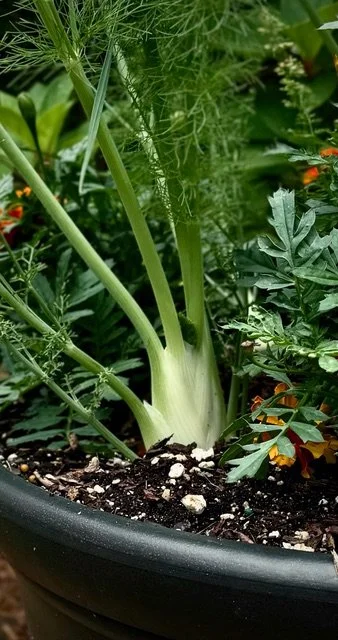
Some plants that have been a challenge in the past are thriving in places I never expected, a good reminder to rotate their locations every year. For example, the fennel is loving its home right now, in one of the large containers on the north side of the lawn. They’re forming large, white bulbs and tall, feather-like fonds and getting bigger every day. Another plant happy about an address change is the celery. It’s tucked into a new pot with good sun and soil, surrounded by rosemary and producing tall sturdy stalks with lush, beautiful leaves.
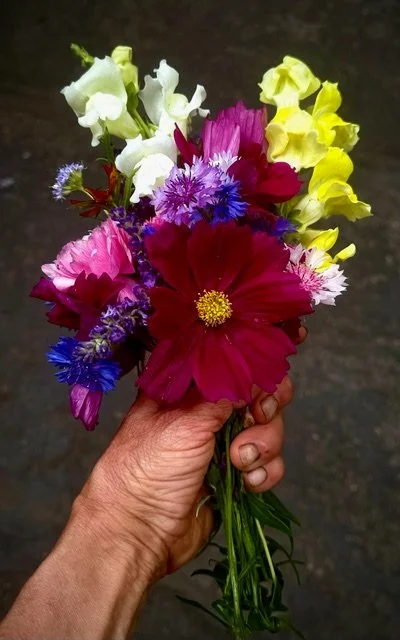
The herbs are abundant and in need of regular trimming, which directly translates into the kitchen. They grace omelets, spike salads, become aioli, season oils and flavor compound butters. Also booming in abundance are wildflowers from the mixed seeds I scattered around the grow house. I put them there to attract pollinators, but having enough flowers for daily bouquets is an upside that I wasn’t expecting.
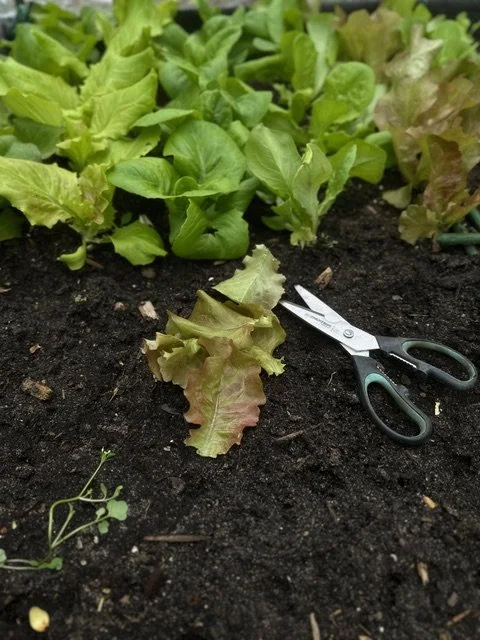
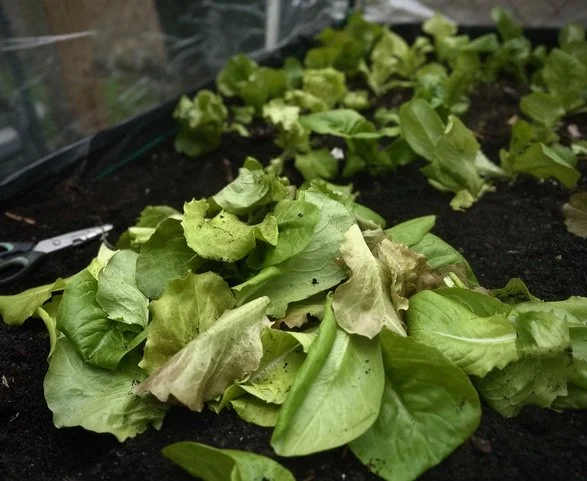
The lettuce, spinach and kale are offering me delicious salads regularly, which are perfect tossed with a bright, refreshing vinaigrette. Nothing is more satisfying than being able to assemble lunch with what’s growing out back. I’m harvesting green beans and snap peas daily, which I munch on while making my rounds. I like to keep them available all summer, so I plant them in succession.
Succession planting is perfect for quick-growing vegetables, which don’t stay productive for very long. I do this with carrots, salad greens, green beans, beets and radishes, because they stop producing or get bitter. Succession planting is done by dividing the bed into four sections and planting each separately a few weeks apart. Timed correctly, the plant in the first section should be ready to pull out when you need it for new seeds again.
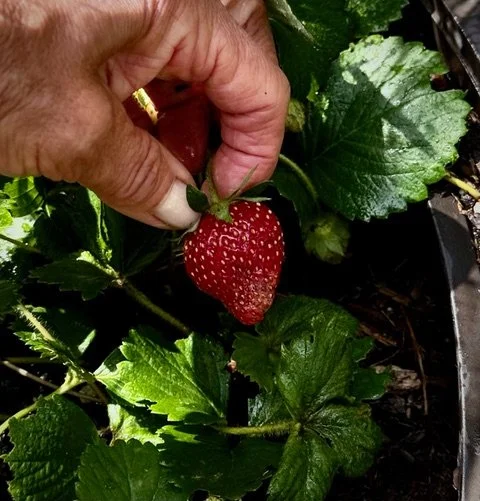
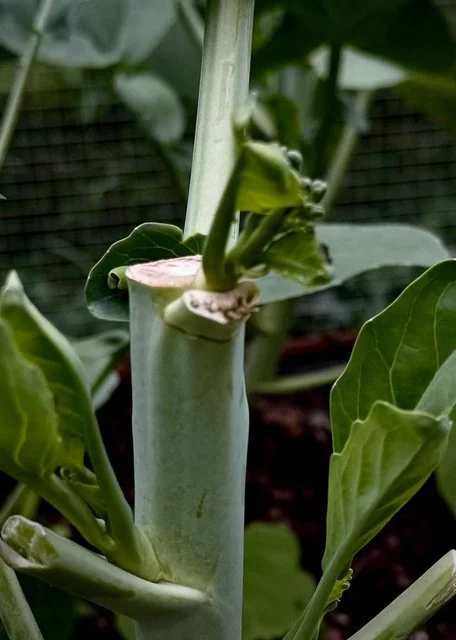
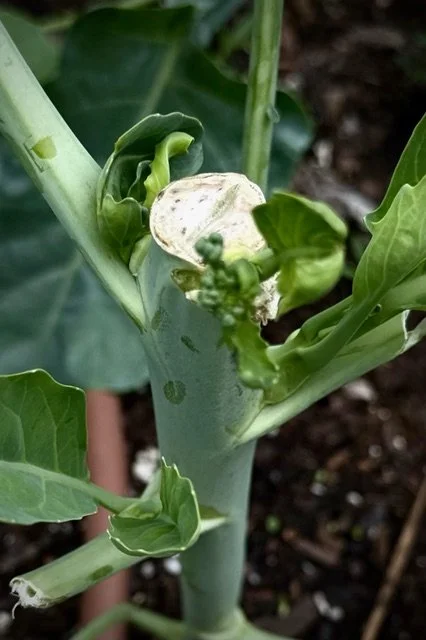
Growing baby broccoli is absolutely the way to go. They take less time than full size crowns, are sweeter, and produce multiple heads after you harvest them. I’ve already cut them once, and they are working hard to develop new heads—the gift that keeps on giving. The strawberries are ripening and have been added to my roving snack menu.
The cauliflower and cabbage are maturing but not all at the same rate. The difference is often related to where they are and how much sun they get, which isn’t always easy to predict. The sun’s angle changes throughout the summer, which alters the amount of exposure in different areas. So, something that gets full sun early in the spring can transition into partial sun by August and vice versa.
This year, for the first time, there’s a problem with the eggplants. Flea beetles are poking holes in nearly every leaf, making it difficult for them to grow. I'm using neem oil and insecticidal soap, but neither has made much of a difference. That’s why, I decided to bring out the big guns to help this problem.
Early in spring, I purchased a praying mantis cocoon at the farmers market, which are considered beneficial garden insects. It was guaranteed to have 200 eggs inside, which you release in the garden once they hatch. While I love the idea of a natural solution, the problem is that bugs can really freak me out. But for the sake of these nightshades, I’m forcing myself to become friends with a select very few, the kind that help support my mission. I’ll keep you posted on the how they do.
That's where things stand in the garden, with some things thriving and some struggling. The good news is that the garden is busy, which means I am busy. And I wouldn’t have it any other way.